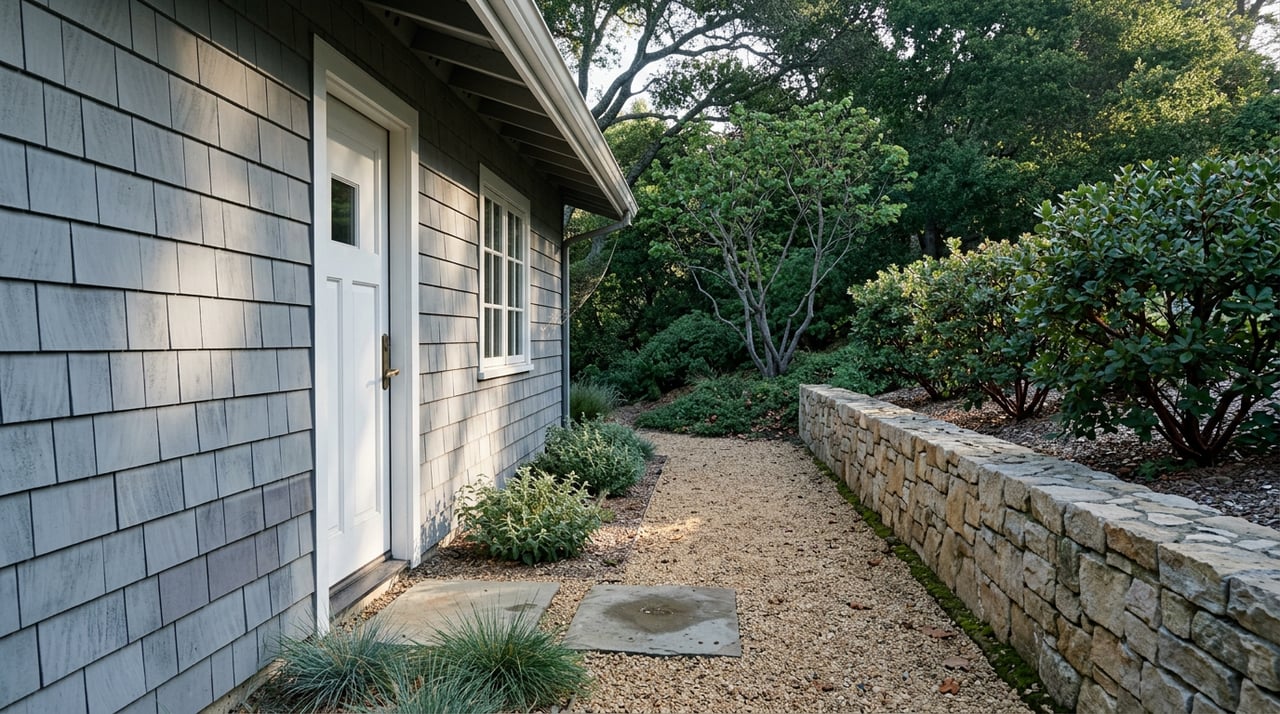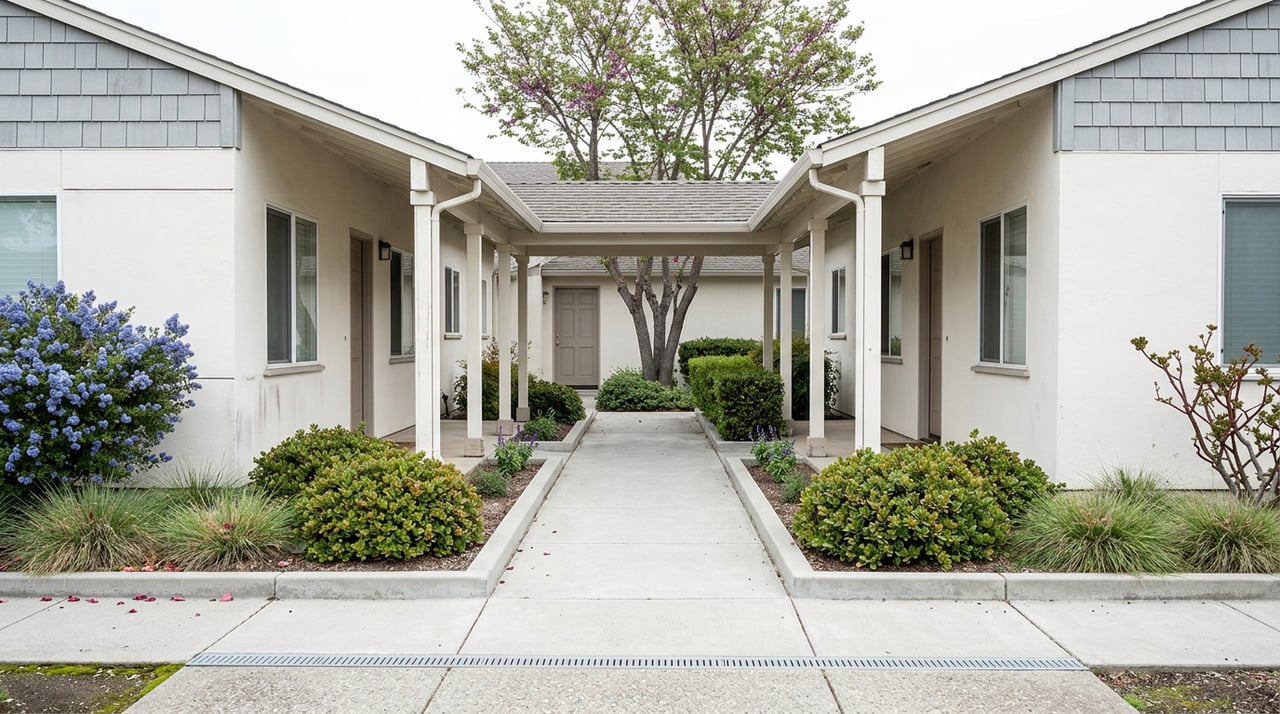
A Rossmoor listing shows up with a price that looks almost gentle next to the rest of Walnut Creek. A two-bedroom condo in the low $600,000s, maybe a co-op in the $200,000s, sitting inside a gated 1,800-acre community with golf courses, a fitness center, and a calendar of clubs that would take years to work through. The instinct is to treat that number the way you'd treat any other listing price: as the thing you're negotiating against.
It isn't. The purchase price is the smallest number in a Rossmoor transaction. The larger ones live in three separate systems that don't show up in a search result: a mortgage industry that currently treats most of the community as ineligible for standard financing, one of 23 small governments that each run their own books and their own rules, and a City of Walnut Creek permitting process that runs in parallel to all of it. Miss any one of those and the timeline you expected stretches by weeks, sometimes longer.
The Fee That Moved While Buyers Were Deciding
Start with the number that changes the math on its own. Every new resident pays a one-time Membership Transfer Fee to the Golden Rain Foundation, the nonprofit that runs Rossmoor's shared amenities and services. That fee was $14,000 at the start of 2026. It rose to $18,000 on April 1, and it has stayed there since, which means anyone shopping today is budgeting against the higher figure, not the one that shows up in older articles or a friend's memory of what a neighbor paid last year.
The fee is separate from your down payment, separate from closing costs, and it funds long-term capital improvements to the community's common areas rather than anything tied to your specific unit. It is not negotiable and it does not scale with the price of the home. A buyer at $250,000 and a buyer at $1.8 million pay the same $18,000. That flat structure means the fee is proportionally heavier on the entry-level co-ops that make Rossmoor's lower price band possible in the first place.
Why a Lender Says "Non-Warrantable" Before Anything Else
Here is the mechanism that explains most of the friction in a Rossmoor purchase, and it has nothing to do with the home itself. In early 2024, Rossmoor's community insurance coverage fell below the thresholds Fannie Mae and Freddie Mac require for conventional loan eligibility, a byproduct of wildfire-related pressure on insurance markets across California. The result was a community-wide designation as non-warrantable, meaning most condos and co-ops in Rossmoor cannot be financed with a standard conforming mortgage, regardless of the buyer's credit or income.
This does not mean the homes are uninsurable or that Rossmoor sits in a fire zone. It means the HOA's master insurance policy doesn't clear the specific bar the government-sponsored entities set for backing a loan. Practically, that pushes buyers toward one of three paths: a cash purchase, a portfolio loan held by the originating lender rather than sold to Fannie or Freddie, or a non-QM product built for exactly this kind of ineligible property. Each of those options moves slower and costs more in rate or reserves than a conventional loan would, and not every loan officer works with them regularly.
If you're sequencing a Rossmoor purchase, the order matters more than it would elsewhere:
- Confirm financing eligibility before you tour, not after you write an offer. Ask directly whether a lender has closed non-warrantable loans in this specific community within the past year.
- Get a pre-qualification that names the property type. A generic pre-approval letter for a conforming loan means nothing here.
- Ask the seller's agent for the specific Mutual's most recent insurance and reserve documentation before you commit earnest money, not after.
- If cash is the plan, confirm the Mutual's own cash-buyer qualification rules before assuming your bank statement is sufficient proof.
Twenty-Three Small Governments Under One Roof
Rossmoor is not one HOA. It's organized into 23 separate associations called Mutuals, each with its own elected board, its own reserve fund, and its own monthly coupon, the local term for the HOA dues that cover maintenance, insurance, and a share of the community's operating costs. Second Walnut Creek Mutual's coupon runs $1,294 a month as of the start of 2026, not including property taxes, and the Mutual itself describes that figure as one of the lowest in the community. Other Mutuals, with different building ages, different reserve funding levels, and different amenities attached, carry different numbers entirely.
The variation goes beyond monthly cost. If you're planning to buy with cash rather than financing, several of the co-op Mutuals impose their own income or asset tests before they'll approve the transfer. The exact thresholds differ by Mutual:
| Mutual | Cash-purchase qualification (approximate) |
|---|---|
| Mutual 1 | Net monthly income at least 3.5 times the monthly coupon, plus $50,000 in liquid assets, or $500,000 in liquid assets in place of the income test |
| Mutual 2 | Annual income at least 3 times the annual coupon total, plus $50,000 in liquid assets |
| Mutual 8 | Net monthly income at least 3.5 times the monthly coupon, plus $50,000 in liquid assets |
These figures come from each Mutual's own governing documents, and a buyer or their agent should confirm the current version before an offer goes in. The point isn't the specific multiplier. It's that the Mutual you land in functions almost like choosing a different building's bylaws, and two units listed a few hundred feet apart can carry meaningfully different financial hurdles to close.
The Inspection That Can Hold Your Money in Escrow
Every resale in Rossmoor goes through a landscape department inspection before the sale can close, checking the unit's exterior and grounds against Mutual policy. If the inspector finds a violation, correction is required before final approval, or funds are held in escrow until the work is done. That single step catches sellers off guard more than almost anything else in the process, because it's not a home inspection in the traditional sense. It's a compliance check against rules the buyer may never have seen.
Remodeling adds a second layer entirely. Any work touching plumbing, electrical, structural elements, or HVAC needs sign-off from both the Mutual's architectural committee and the City of Walnut Creek's Building Division, which holds jurisdiction over construction inside Rossmoor the same way it does anywhere else in the city. Getting one approval does not get you the other. A local remodeling contractor who has worked in the community for decades put it plainly in industry guidance for homeowners: unpermitted work becomes a disclosure problem at resale, and because Rossmoor is a co-op structure in many Mutuals, the board can require remediation before a sale is allowed to close at all. A kitchen update done without the right permits years ago can stall a transaction that otherwise has nothing wrong with it.
Why the "Walnut Creek Median" Doesn't Describe Rossmoor at All
There's a market-level consequence to all of this that's easy to miss if you're only looking at Walnut Creek's citywide numbers. Zip code 94595, which covers Rossmoor and the surrounding Tice Valley, sat at roughly $672,000 in early 2026. Zip code 94598, elsewhere in the same city, sat closer to $1.3 million over the same period. Same city name, two markets that share almost nothing else.
Rossmoor sells in high enough volume that its own median, generally in the $630,000 to $675,000 range, pulls the citywide figure down whenever activity there is heavy, and lets it climb when it isn't. A buyer comparing "the Walnut Creek median" against a Rossmoor listing price is comparing two numbers that were never describing the same thing in the first place. If you're trying to gauge whether a Rossmoor unit is priced fairly, the comparison that matters is against other recent sales inside the same Mutual, not against Walnut Creek as a whole.
Who Actually Fits This Structure
Rossmoor requires at least one resident in the household to be 55 or older, with additional occupants generally needing to be 45 or above unless they're a caregiver. No one under 18 can live there. The property types span a wide range: co-ops start in the low $200,000s and represent ownership as a share in a corporation rather than a deeded unit, condos run from roughly $400,000 to $1 million depending on style and view, and single-family homes or premium garden condos start above $1 million. For households that eventually need more support than independent living allows, The Waterford operates within the community as a separate 300-unit option with meal service and additional care, distinct from the standard Mutual manors.
If you're helping a parent evaluate this move, the honest advice is to treat it as a different kind of transaction from the start, not a smaller version of a typical Walnut Creek sale.
A Few Questions Worth Asking Early
Is a Rossmoor co-op the same thing as a condo? No. A co-op means you own shares in a corporation that holds title to the building, with a right to occupy your specific unit. A condo means you hold a deed to your individual unit. The financing paths, resale rules, and even the tax treatment differ between the two.
Can I use a regular 30-year mortgage? In most cases, no, because of the non-warrantable designation. Cash, portfolio loans, and non-QM products are the common paths, and the details vary by Mutual and by lender.
What happens if my spouse is under 55? Rossmoor's rule requires only one qualifying resident per household to meet the age threshold, with additional occupants generally needing to be 45 or older, so a younger spouse isn't automatically disqualifying. The specific documentation Rossmoor requires should be confirmed directly rather than assumed.
Rossmoor rewards patience and specific knowledge more than almost any other corner of Walnut Creek's market. If you're weighing a move into the community, or helping a family member think it through, Ryan Weible is glad to start with a conversation about what your particular Mutual, budget, and timeline actually require.